One of the most memorable places I visited in Virginia last fall was Historical Jamestown. It was the day I was flying home, but I wanted to make time to visit this important American site- the site of the first permanent English colony, founded in 1607. Ever since I as a little girl, early American history has fascinated me. Growing up, most of us imagine ‘the beginning of America’ as happening in Plymouth (you can see my visit there HERE!) but in actuality, colonial history first began in Virginia. I was so excited to begin my exploration of that early start!
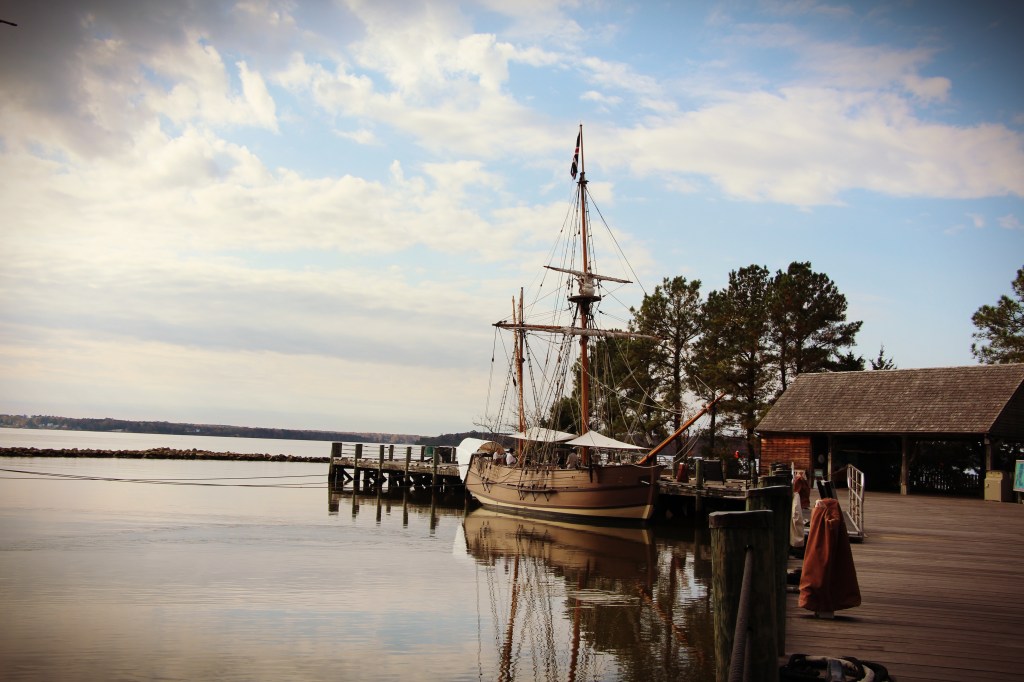
It was an absolutely beautiful day, and I arrived just as the museum was opening. I was lucky that I was able to stay one step ahead of the large fieldtrip groups for the most part, and when I reached the the shores of the James River, there was a replica English ship waiting! The first settlers of Jamestown arrived in 3 ships- The Susan Constant, The Godspeed and the Discovery. I was welcomed aboard the replica ship by a friendly crew all decked out in 17th century sailor garb and invited to look around. I was amazed at how small the ship was, really….when we imagine these great voyages, we tend to imagine these ships as great hulking things; instead they are small with a modest hold meant to store both goods and people. It would have been a very snug ride indeed! I honestly don’t know how any ancestor of mine did it….I can’t even ride in a car on curvy road without some sort of medicine to help me!

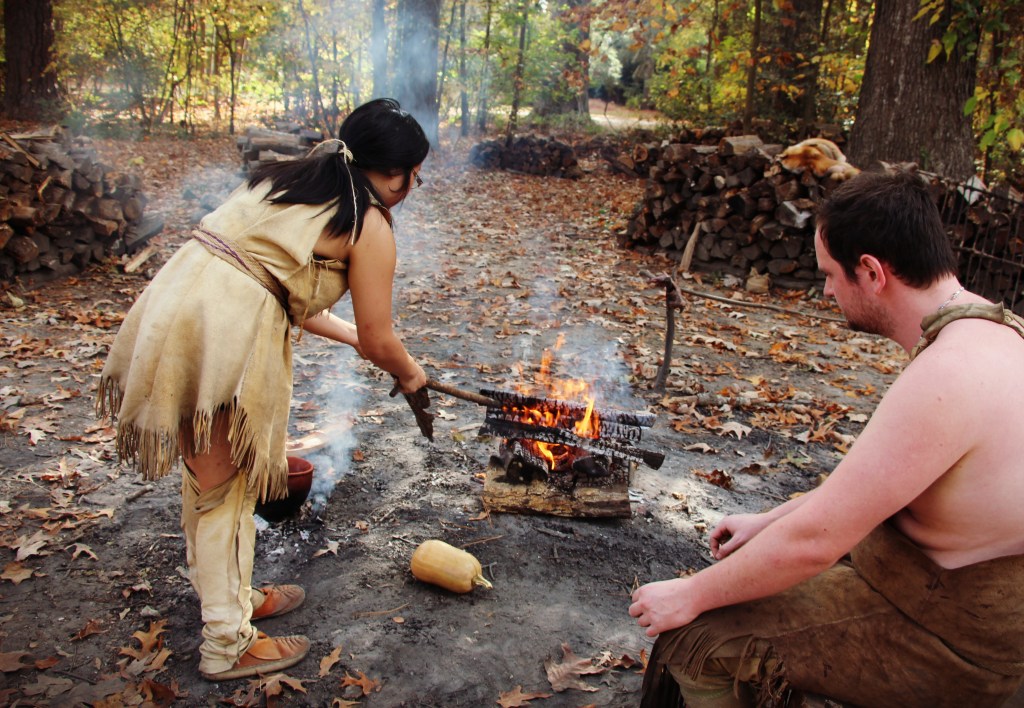
On land near the river’s edge there was also a replica Powatan settlement, where living and working structures were set up and a pair of interpreters were preparing a morning meal. Squirrel and squash was to be the meal to start the day, and the interpreters were already busy with tasks they’d be sharing with the school groups coming in for the day.
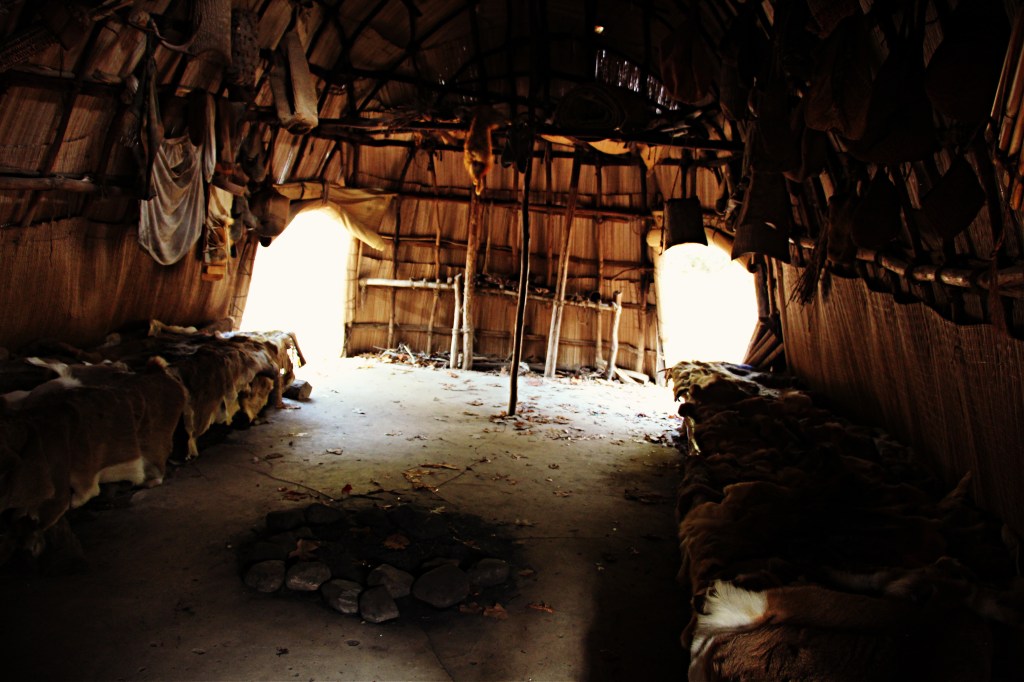
I was able to step inside one of the replica long houses in the settlement and get a feel for how the native people of the area would have lived when the Englishmen arrived. The longhouses were made of wood, bark and other natural materials, with a fire pit area in the center and living and sleeping spaces lined with furs along the walls. Many people, including several generations of a family, would have made their homes in longhouses such as these. It felt so secure against the elements and like part of the landscape itself.
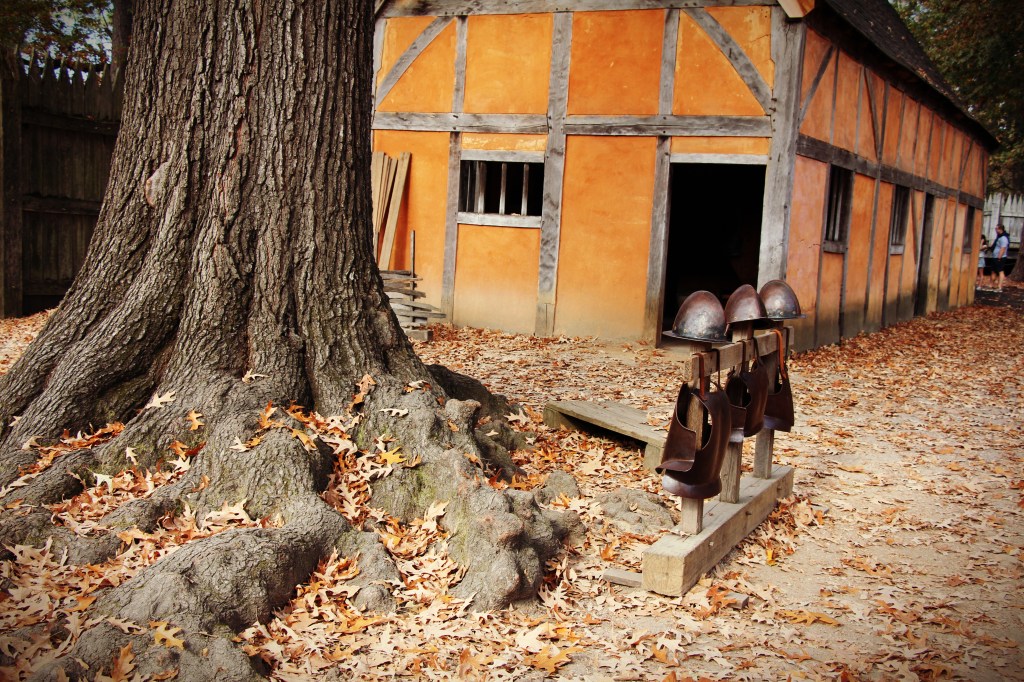
Soon I found myself approaching the gates of the fort and it was absolutely breathtakingly beautiful! The autumn foliage! The blue sky! The impossibly pumpkin colored waddle and daub! Have you ever seen such an autumnal scene?!
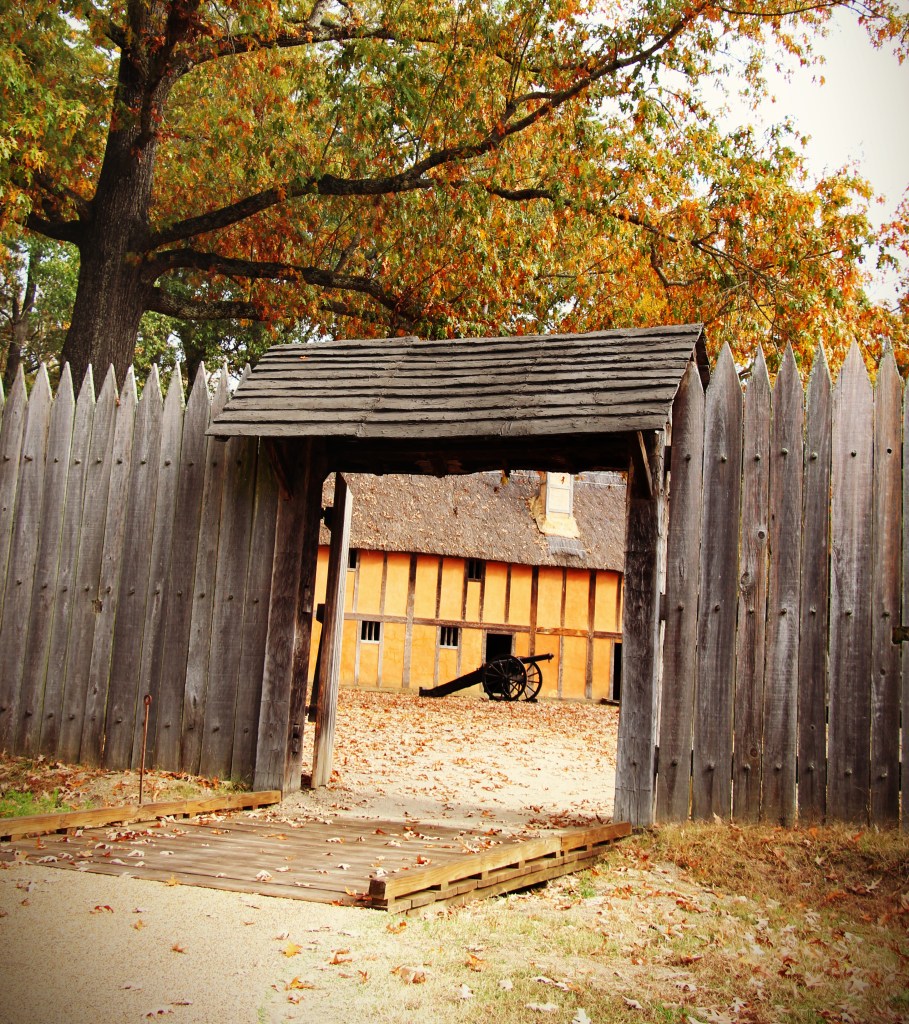
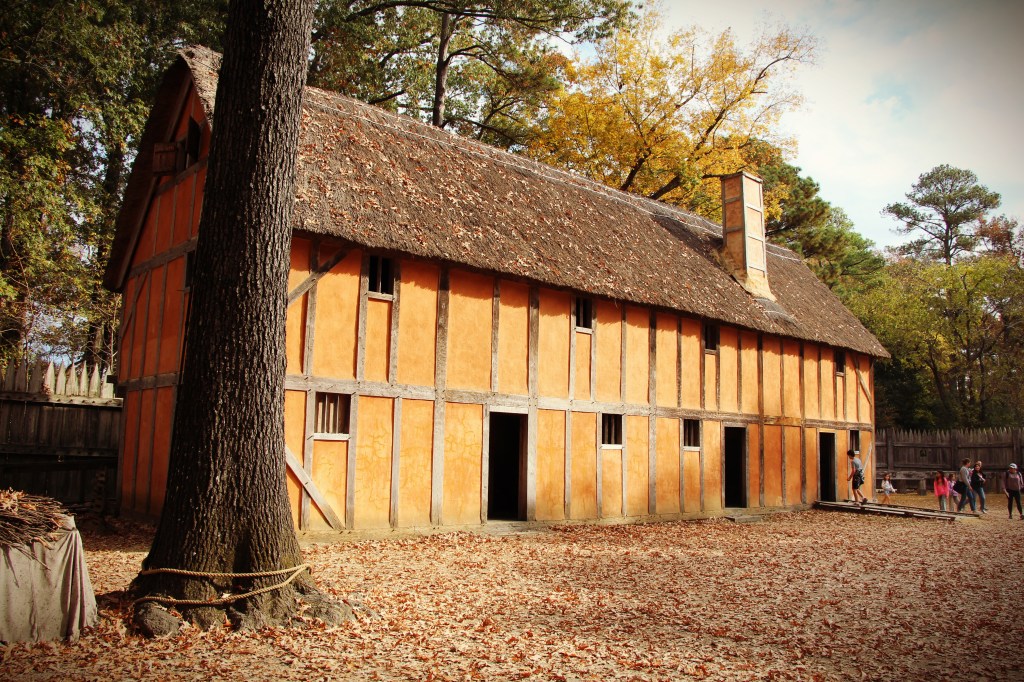
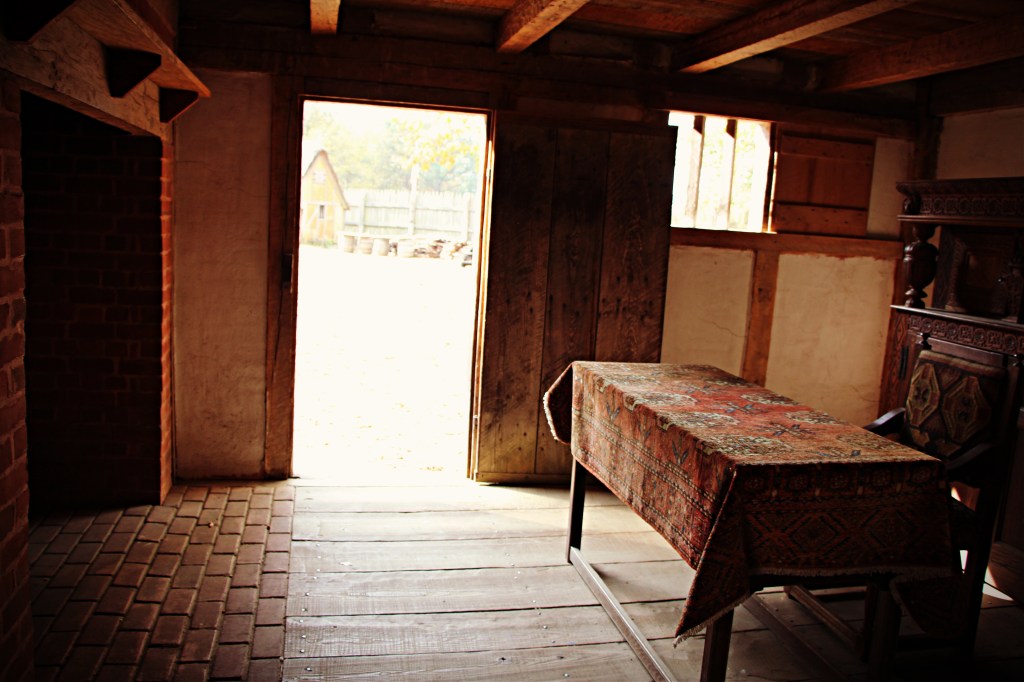
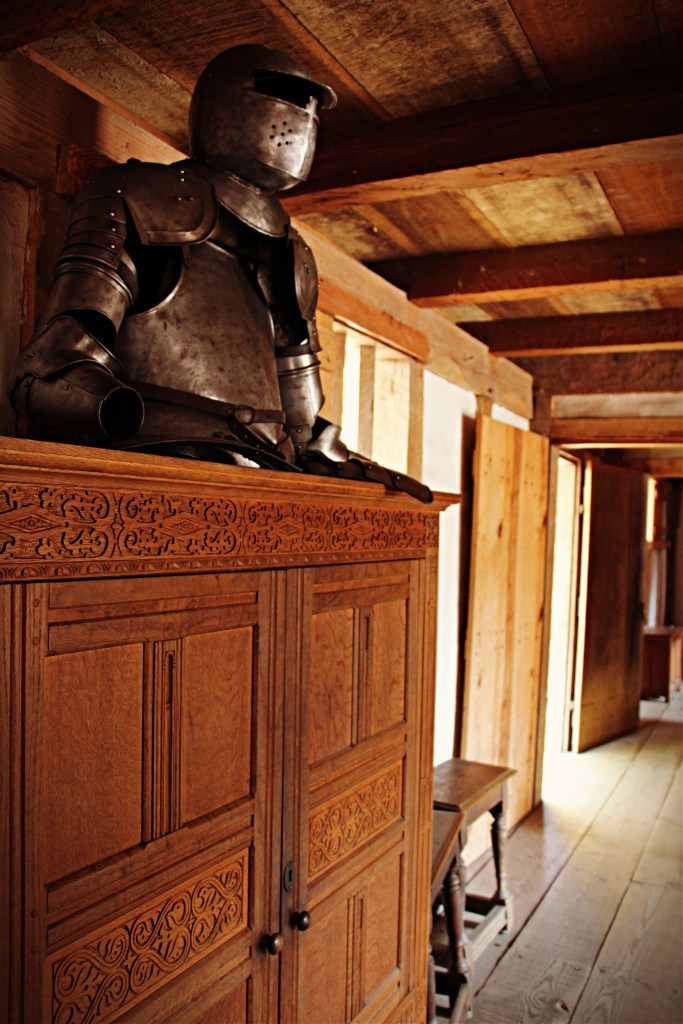
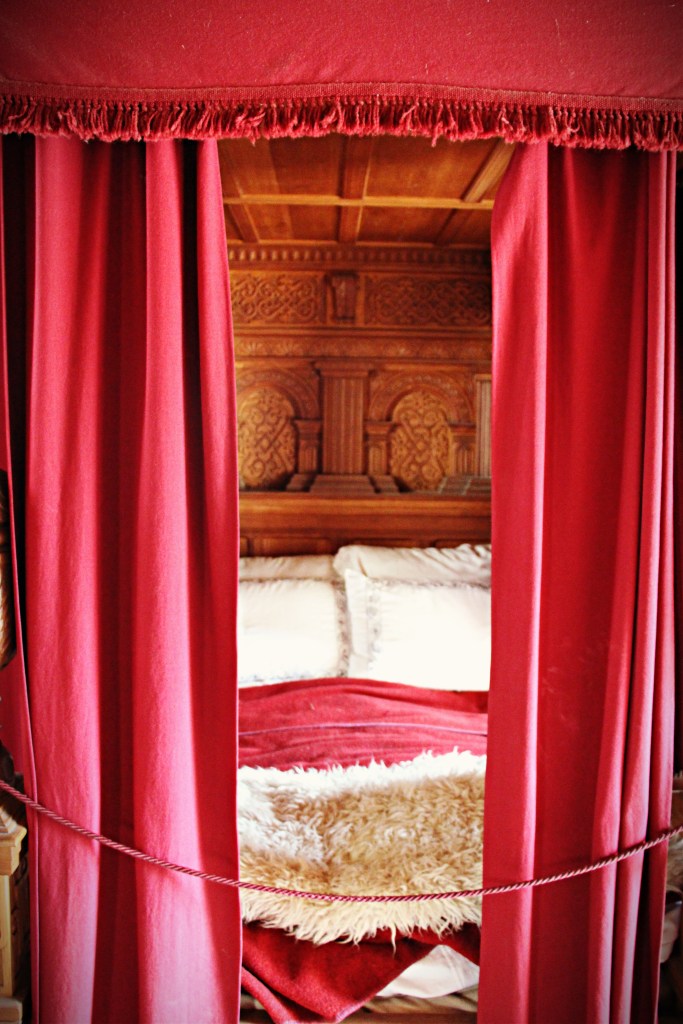
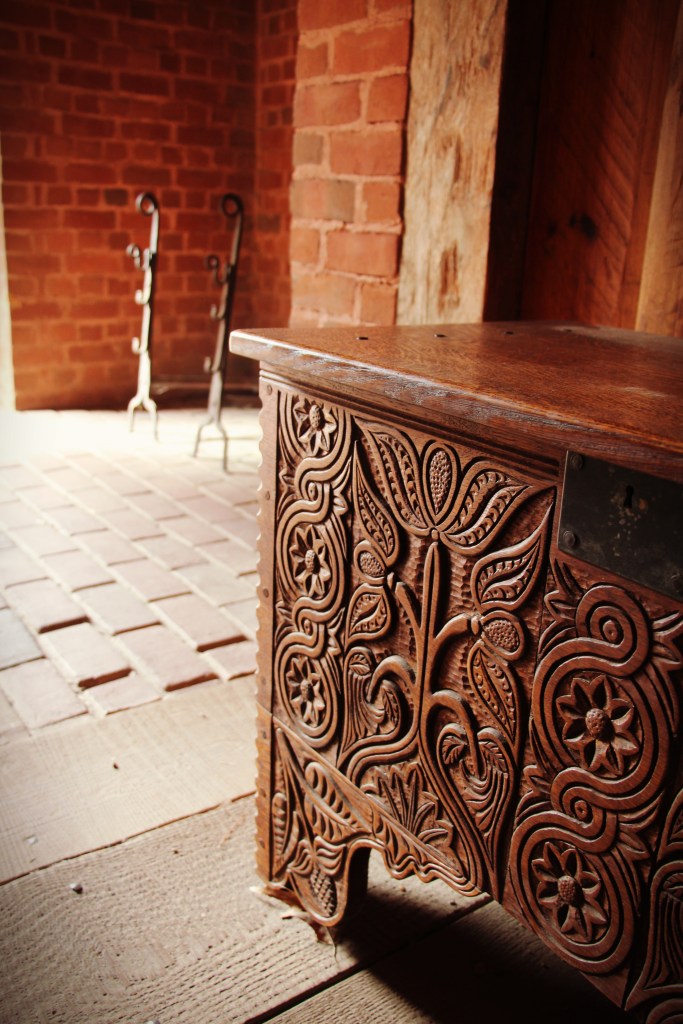
The fort settlement was an absolute dream to explore. I loved seeing the richly carved wooden furniture, the textiles and the bits of every day life displayed for visitors and for interpreter use. It was interesting to visit here, where the people were mostly Anglican and were making this settlement for monetary gain instead of stark Puritanism like in Plymouth. There were many similarities (the pilgrims used more color than you’ve been lead to believe!) but there was also a hint of more….decadence-in-the-wilderness, shall we say?
There was also more of a military feel, with armor displayed or hung at the ready for quick use. The English and the Native Americans had an uneasy, and often hostile relationship in this region. The men (and it was largely a population of men here in Jamestown) would gather often in the church not so much to pray, but to do a head count to see who was still alive.
The orange color of the houses comes from the iron content in the Virginia soil used to create the waddle and daub. I had no idea this would be the color of the buildings, and I absolutely loved it! It was perfectly autumnal, and made this autumn loving lady’s heart sing.


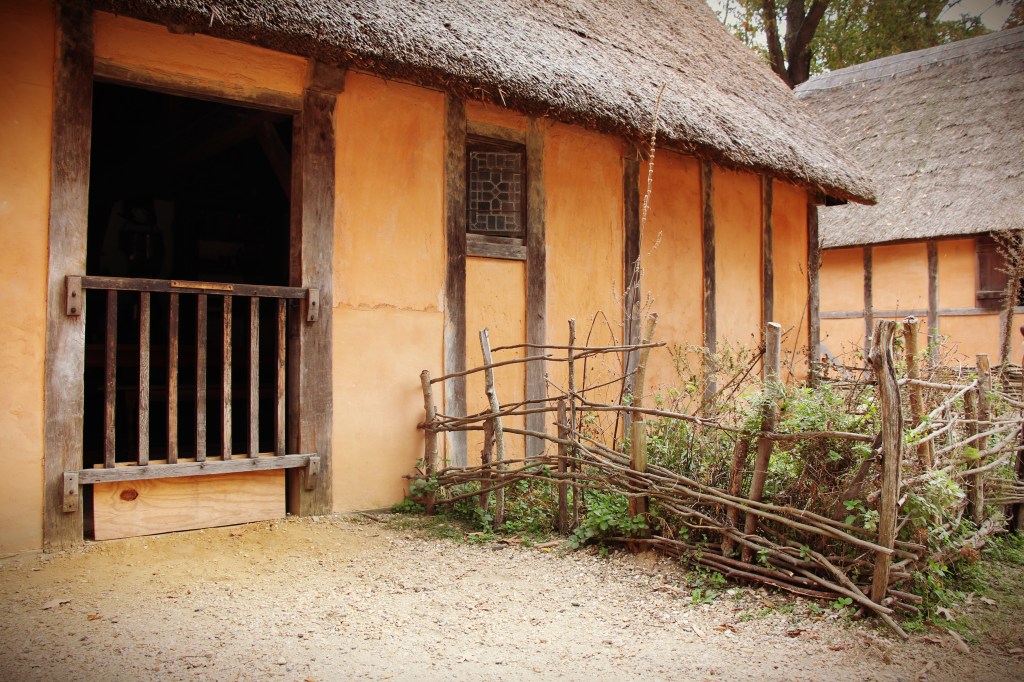
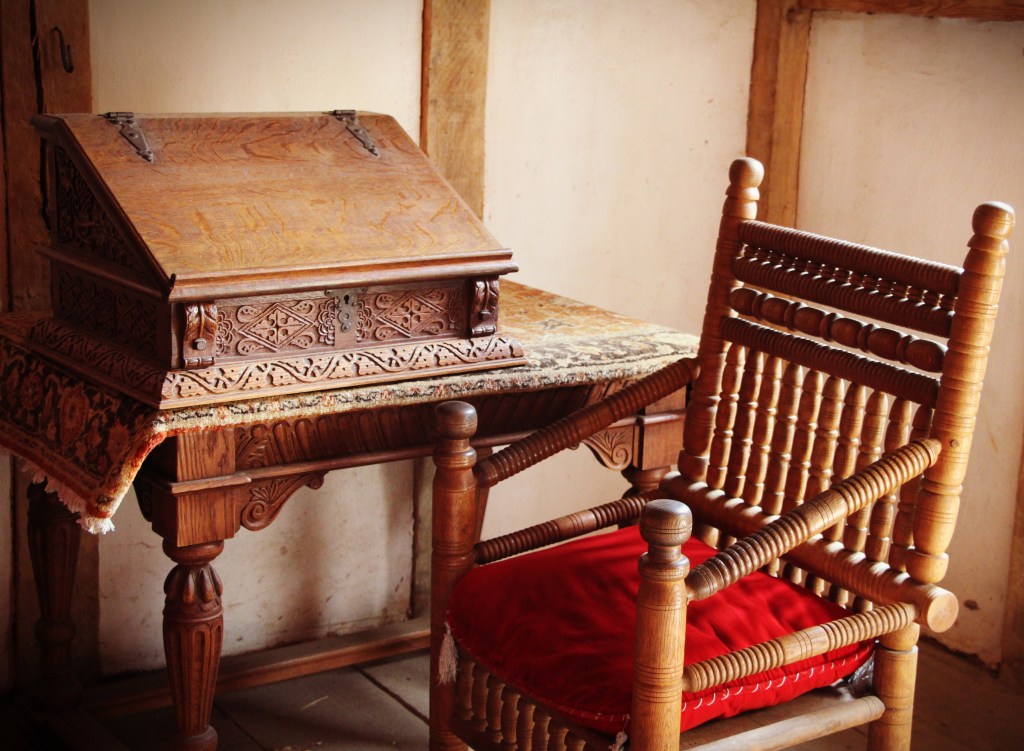
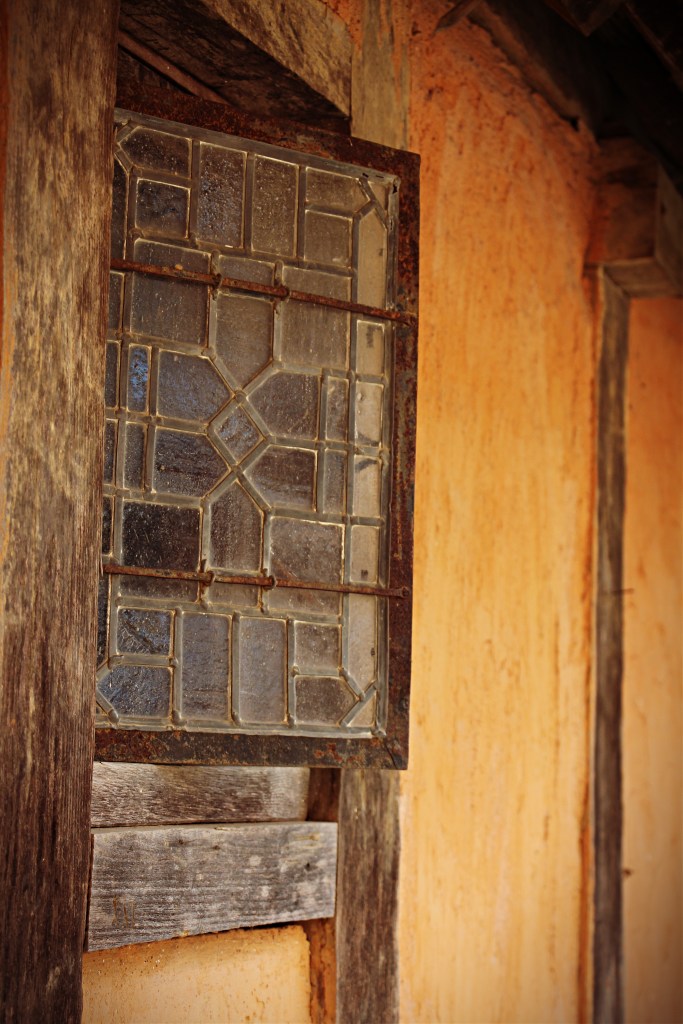
This village was very much like a late medieval settlement plunked down in the wilds of the Virginia landscape. Honestly- it was. The language, the traditions, the food, the culture, were all English. Places like these are not common to visit here in the US, and I was so fascinated to see it! My favorite items were the intricately carved trunks and desks, the bright red textiles, the slightly wild cottage garden, and the precious diamond cut glass used in the windows.
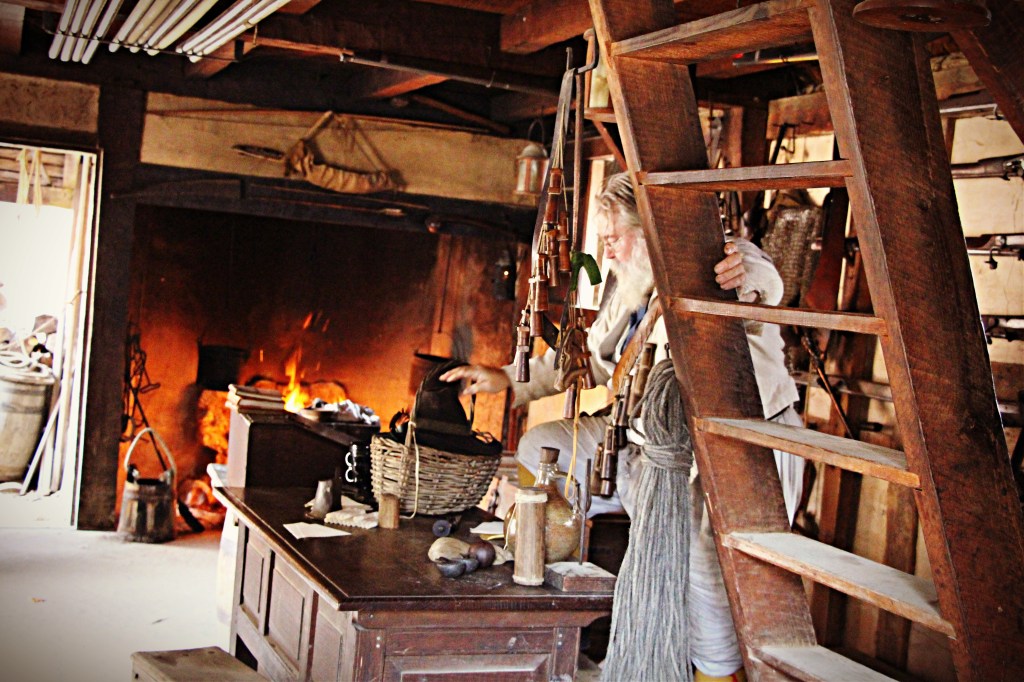


In the fort they had replica homes, a blacksmith, a church and a giant storehouse where all the items the men were collecting to send back to the Mother Country were kept. The crop that really saved the settlement from becoming a complete failure was tobacco- something that was all the rage in Europe, and a crop the Spanish had seemingly cornered the market on. Somehow colonist John Rolf got his hands on some tobacco seeds, and the fate of the Colony of Virginia was set. You can see some tobacco drying in the eaves of the storeroom above.
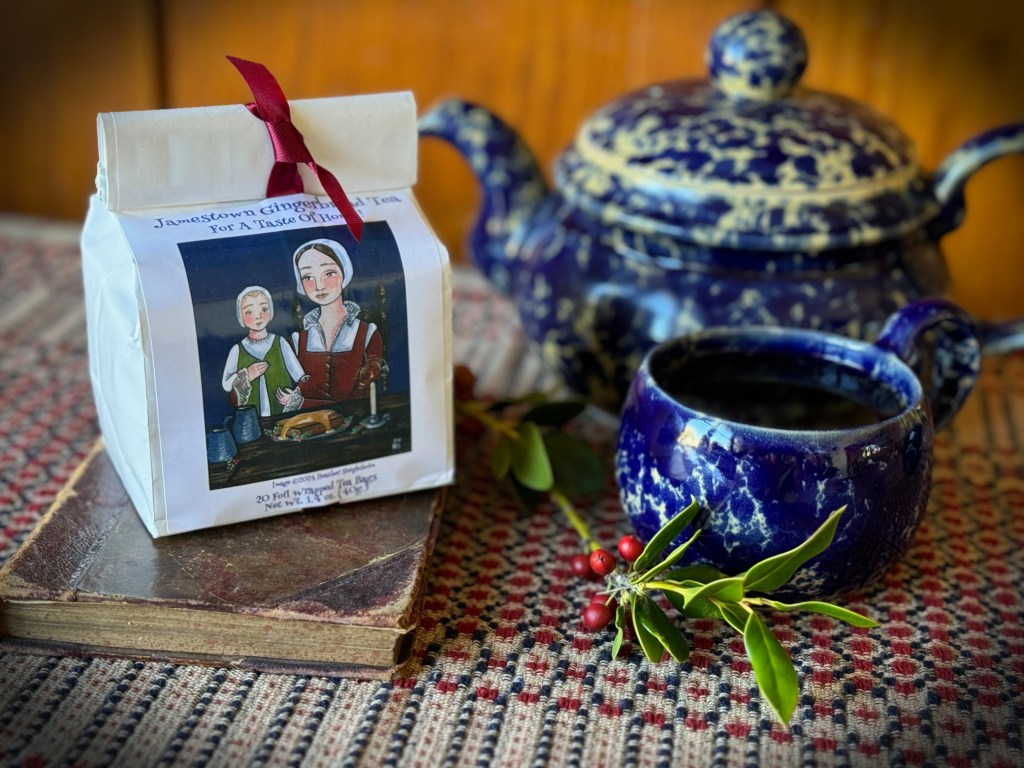
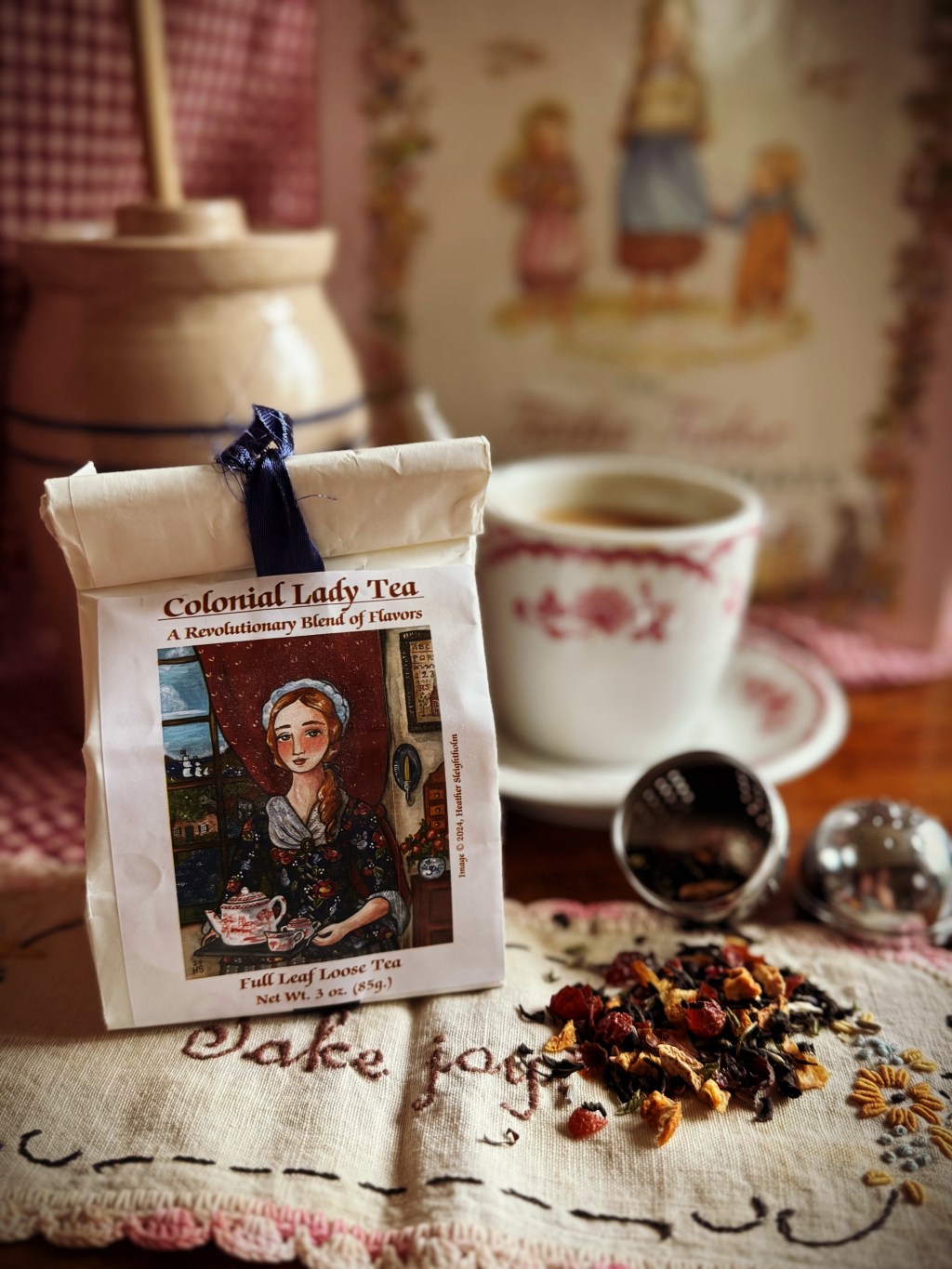
One of our tea flavors is inspired by Jamestown, Jamestown Gingerbread! It has a nice holiday spice to it to keep you warm! I hope you enjoyed this peek at historical Jamestown, I’ll be back again soon with another Virginia adventure!


 Sleightholm Folk Art
Leave a comment