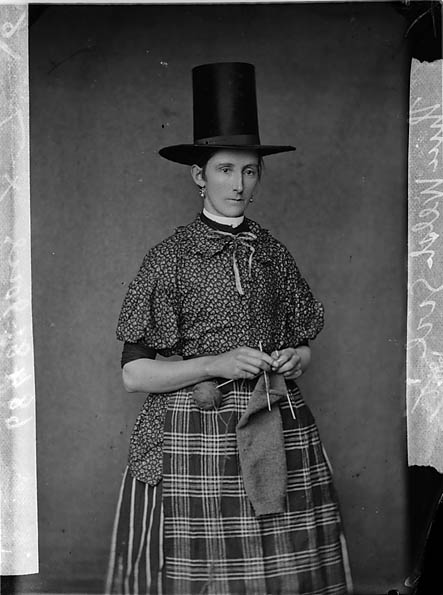
A few years back, I was searching for vintage photographs of women knitting, and came upon the subject of Welsh women knitting while wearing the most intriguing ensemble I’d ever seen!
What caught my eye immediately was their distinctive tall hat– and the wonderful mix of pattern in their dress. The women photographed are usually of the farming class, rather no-nonsense looking, and completely captivating. I knew one day, I wanted to paint them!
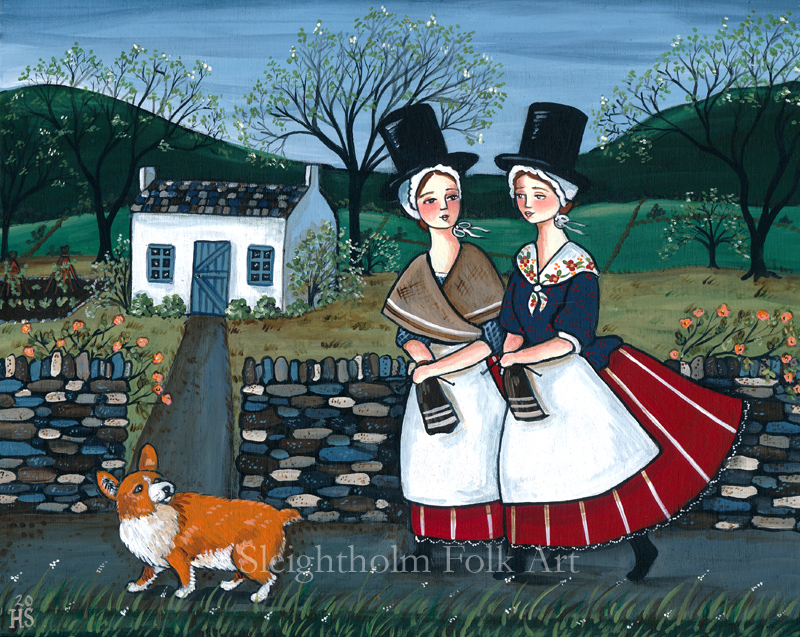
And thus, my painting “Welsh Knitters” was born! I set them in a rural Welsh landscape with, of course, a bright Welsh Corgi companion as they walked along the country road. I studied photos of Welsh stone walls for the wall that leads to the little cottage garden, and became enchanted with the landscape of rural Wales.
Wales is a country that is part of the United Kingdom, and a place determined to keep it’s culture alive and unique from it’s English neighbors to the east. In Wales, you’ll find many people speaking Welsh first, English second, and that’s also how most things are labeled from shops to street signs.
That determination to preserve the Welsh identity is also why the Welsh folk dress, as painted in my painting, has continued to survive through the centuries. It is a symbol of national pride and identity. In Welsh, the dress is called Gwisg Gymreig draddodiadol, and was worn by the women of rural Wales.
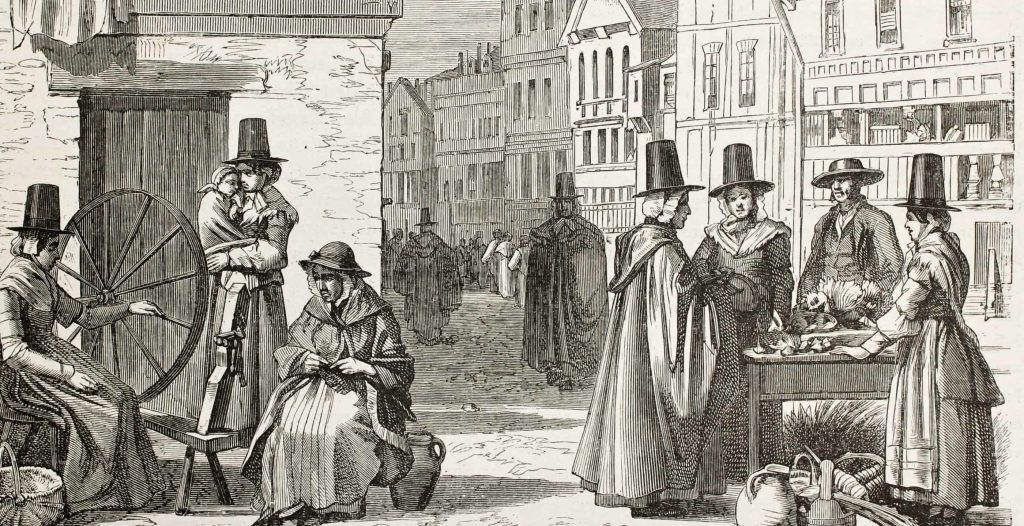
History of the dress seems to only go as far back as the late 18th century, when tourists began visiting from outside countries and describing the unique way the countrywomen dressed. Most noticeable was the tall hat, and it seems that the women of Wales were fond of wearing men’s hats in general. They style seems to evoke 17th century men’s hatwear fashion, but I didnt see any direct connection in my reading. Many times the women also wore a white ruffle edged cap beneath the hat, but that was not always the case and may have been a regional option.
In the 18th century, the dress was something called a ‘bedgown’ made of Welsh wool, but as the year progressed changed to cotton– usually with a blouse in one pattern in a skirt in another (usually striped)– as cotton fabric became more readily available.
The cut of the blouse, the use of kerchiefs at the neck, shawls of wool or imported paisley all seemed to be used depending on the specific area of Wales. Women who lived closer to the English border or sea ports were more current in their fashion, while the women in rural inland areas could be years behind on dress cut and fabric choices.
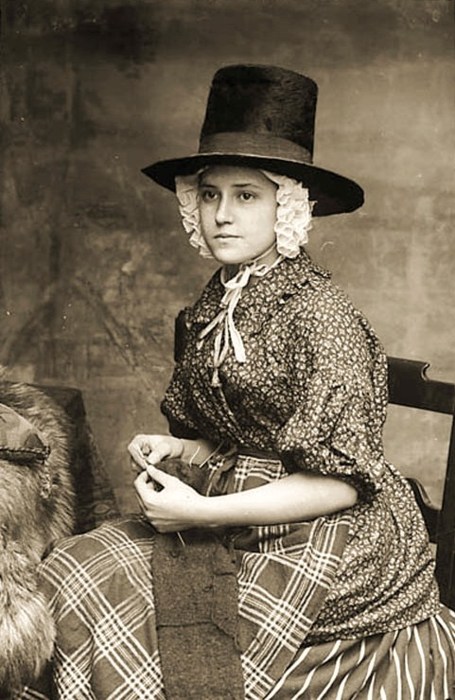
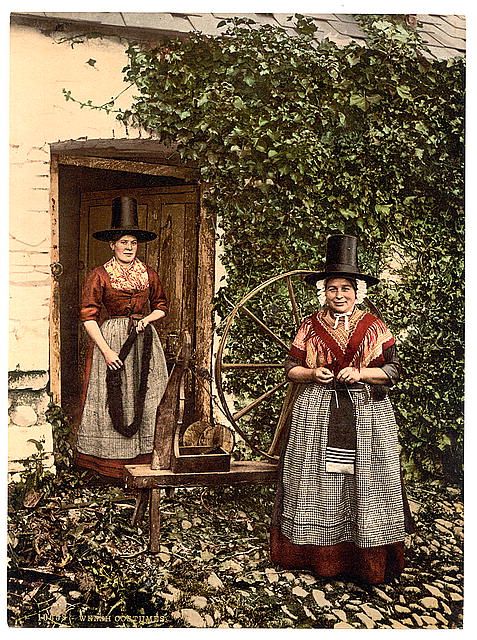
In the 19th century, the dress was worn more for special occasions and market days, and specifically as a point of national pride. Women would wear their traditional dress as they went to sell their wares in town, with their clothes making the point that their wares were locally made and authentically Welsh.
As the tourism industry grew, and the affluent from other areas of Britain came through Wales to take the sea air, the traditional Welsh dress became recognizable as a symbol of the area. Postcards of countrywomen in their dresses, usually working on knitting, circulated. When national events were hosted, the dress was also worn.

The dress is now worn today in Wales mostly as a costume, specifically to celebrate St. David’s Day and by dance teams or choirs. I love that the look, humble as it is, has stood the test of time when so many old regional forms of dress have been forgotten, or swallowed up by industrially produced fashion.
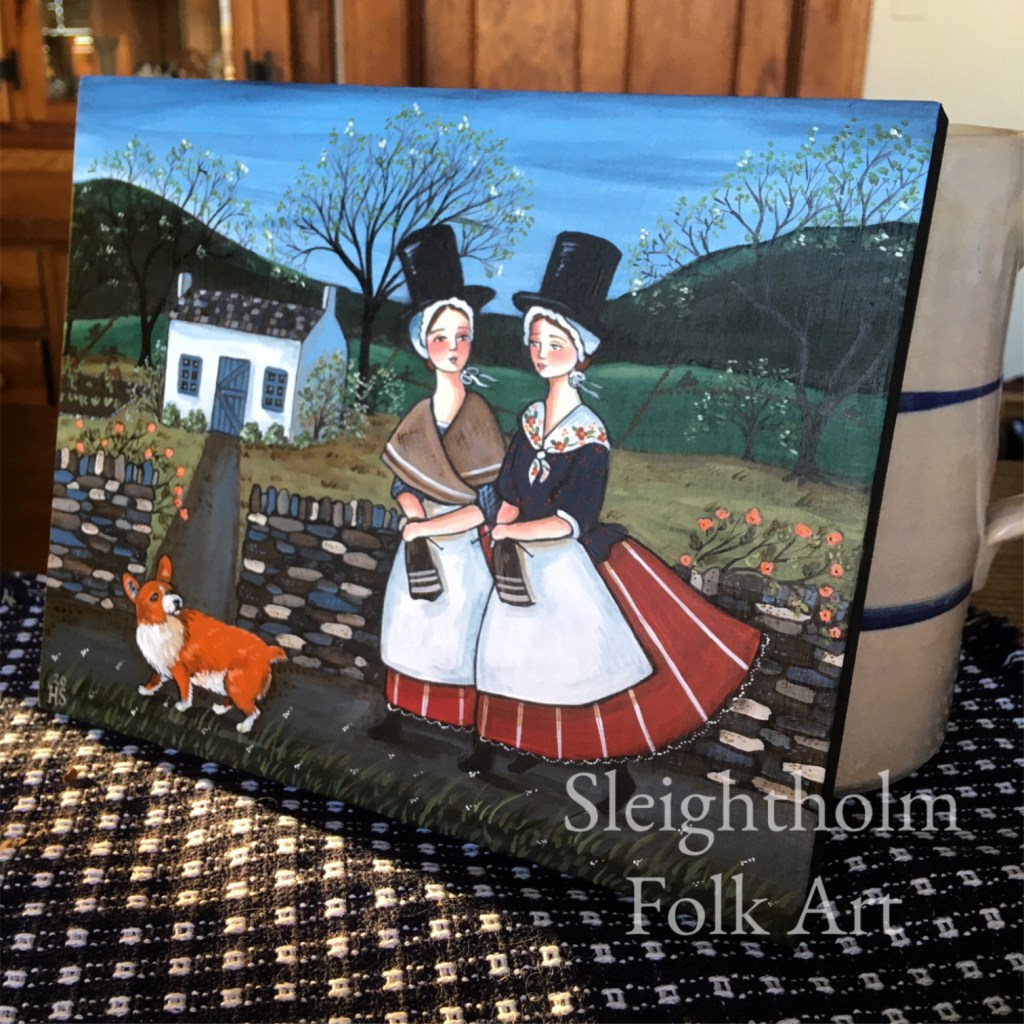
And with all that in mind, I humbly present my own take on a pair of Welsh knitters. Perhaps they are headed to market, along with their trusty corgi. Or going to a friend’s house to knit together. Or maybe you have your own story of where these lovely Welsh ladies are headed?
The painting is now available in my etsy shop and in need of a home! I will also have prints at a later time.
I hope you enjoyed this little exploration of the history of the Welsh dress! I think they’re absolutely beautiful.
Til next time,
h
More information of Welsh traditional dress can be found here…


 Sleightholm Folk Art
Leave a reply to kaiserswest Cancel reply